

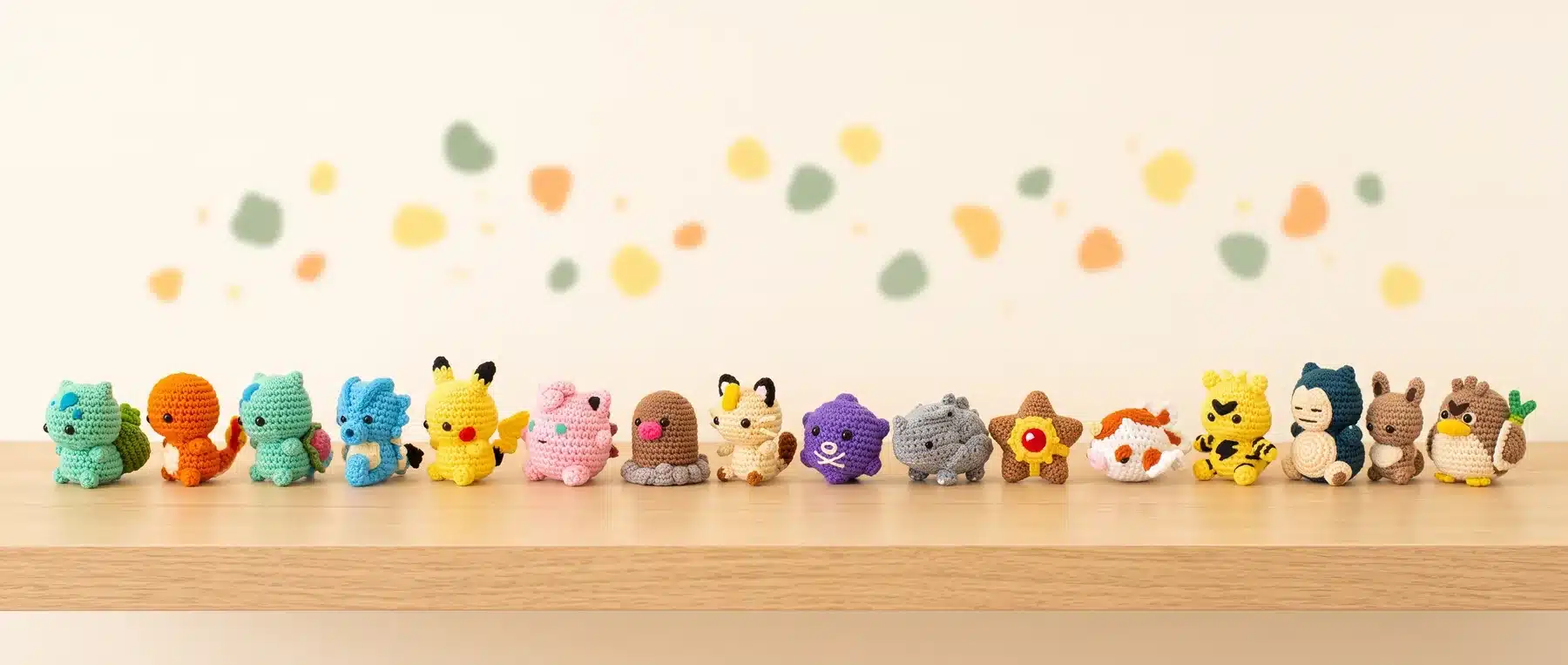
Remember being a kid and desperately wanting the giant stuffed animal from the claw machine, the one that cost your parents twenty dollars in quarters to never actually win? That feeling – the ache for something soft and a little bit magical that you made with your own two hands – is exactly why crochet plushie patterns have exploded again. Except now you’re the grown-up with the hook, the yarn, and (finally) the patience to finish what you start.
The problem is that half the “beginner” amigurumi patterns floating around Pinterest are anything but. They assume you already know invisible decreases, they skip the part where your stuffing keeps poking through gaps, and they definitely don’t warn you that acrylic yarn splits like a bad breakup if you pick the wrong hook. Below are 15 crochet plushie patterns that beginners genuinely finish – tested shapes, honest difficulty ratings, and a few tricks nobody tells you until you’ve already frogged your third attempt.
What makes a plushie pattern beginner-friendly (and what doesn’t)
Before the list, a quick gut-check on what separates a plushie you’ll actually complete from one that ends up in the UFO (un-finished object) basket forever:
- Yarn weight: Worsted weight (US #4 / UK Aran, roughly 20-24 wraps per inch) is the sweet spot for most amigurumi. It’s thick enough to hide stitch definition and small imperfections, but not so bulky that shaping gets clumsy.
- Hook size: Go one size smaller than the yarn label recommends – typically a 3.5mm (US E/4) or 3.75mm (US F/5) for worsted weight. A tighter gauge means your stuffing won’t peek through the stitches, which is the single most common reason beginner plushies look “off.”
- Stitch count: Look for patterns with a head and body under 40 rounds combined. Anything longer and most first-timers lose steam around hour three.
- No-sew construction: This is the real beginner cheat code. Working in a continuous piece (or with very few seams) means no whip-stitching a wobbly head onto a body afterward – which is where a lot of otherwise-good amigurumi go visually sideways.
With that in mind, here are 15 crochet plushie patterns – from timeless critters to a few shapes you won’t find anywhere else.
15 crochet plushie patterns beginners actually finish
1. Classic amigurumi octopus
The octopus is practically the “hello world” of amigurumi: one round ball for the head, eight simple crocheted or braided legs. There’s no shaping puzzle to solve, just repetition, which makes it a genuinely relaxing first project. Difficulty: easy. Time: 2-3 hours with worsted weight and a 3.5mm hook.
2. Chunky little bee
A bee is really a yellow-and-black striped ball with wire or felt wings stuck on, which means it teaches color changes without any tricky shaping. Carry your yarn up the inside of the work instead of cutting between stripes to avoid a dozen ends to weave in later. Difficulty: easy.
3. Softbody whale
Whales are forgiving because they’re mostly one long oval – fins and a tail are optional add-ons, not structural requirements. This is a great “pattern number three” once you’ve got magic rings and increases under your fingers. Difficulty: easy-medium.
4. Round little cow
Cow-print plushies are having a real moment, and the shape is beginner-gold: a ball body, a slightly oval head, and patches added with duplicate stitch or felt so you’re not fighting intarsia in the round. Difficulty: easy-medium. Time: 3-4 hours.
5. Wide-eyed axolotl
The axolotl’s whole charm is in the face – big eyes, a smiling mouth, and those signature gill fronds along the sides. The body itself is a simple tapered tube, so most of your effort goes into embroidery, not construction. Difficulty: medium, mostly because of face placement.
SageandSilky’s signature reversible patterns
This is the part where we admit we might be a little biased – but hear us out, because these two patterns solve a problem every crochet plushie maker eventually runs into: what do you do with the finished toy when you want variety without buying new yarn every week?
6. The reversible Poké Ball
Our reversible Poké Ball crochet pattern is worked in one continuous piece of yarn – no seams, no separate pieces to sew together. Flip it one way and it’s a tidy red-and-white ball; flip it inside-out and it becomes a Pokémon-inspired plushie. It’s the pattern that made us “Pokéball people,” and it’s still the one beginners message us about finishing fastest, because there’s nothing to assemble afterward.
7. Reversible fire dragon (Pokémon-inspired)
If you want to try the reversible construction on something a bit more ambitious, our fire dragon design (Charizard-inspired, and entirely our own unofficial fan-made pattern) hides an orange dragon inside what looks like an ordinary ball. We cover the shaping logic behind it in our full Pokémon-inspired amigurumi collection if you want to see the whole family side by side.
8. Tiny electric mouse (Pikachu-inspired)
A rounded body, two lightning-bolt ears, and a chunky tail – this shape is deceptively simple and endlessly popular for gift-giving. It’s part of our mini amigurumi pattern bundle, which is a great next step once you’ve got one or two solo patterns under your belt.
9. Sleepy giant blob
Big, round, and sleepy-eyed plushies (think of the classic “sleeping blue giant” archetype) are secretly one of the easiest shapes to crochet because the entire body is one oversized sphere. The trick is stuffing firmly in layers as you go rather than cramming it all in at the end, which prevents lumpy, uneven spots.
10. Seed frog
A round green body with a little plant bulb on the back turns a basic frog shape into something instantly recognizable. This is a good “add embellishments” practice project – felt leaves, safety eyes, and a satin stitch mouth.
11. Fluffy fox (with evolution variants)
Foxes are popular because one base body pattern can be restyled into several “evolutions” just by changing the ear shape and tail fluffiness. If you like collecting a themed set, this is the pattern family to start with.
12. Water turtle
A turtle shell worked flat and then attached (or crocheted directly onto a round body) is a gentle intro to combining two techniques in one project without either being too advanced on its own.
13. Friendly leaf sprite
Small, pointy-eared, and leaf-topped, this style of plushie is mostly single crochet in the round with a tiny bit of surface embroidery for a face – ideal for a lunch-break project.
14. Mini reversible bundle patterns
If the reversible concept clicks for you, our Pokémon-inspired mini bundle includes several small-scale patterns sized to finish in a single sitting, which is genuinely one of the best ways to build confidence before tackling a larger reversible project.
15. Gentle giant dragonet
A friendlier, rounder dragon shape (small wings, no sharp horns, a soft smiling face) rounds out this list as a slightly more advanced “graduation project” once you’ve finished a handful of the easier shapes above.
Common beginner mistakes (and quick fixes)
A few things trip up almost everyone on their first few crochet plushie patterns:
- Losing your stitch count. Use a stitch marker on the first stitch of every round, always. It takes three seconds and saves you from frogging six rounds later when your amigurumi mysteriously grows an extra “ear.”
- Stuffing too late or too little. Stuff as you close each section, not all at the end – it’s much harder to push fiberfill through a nearly-closed opening evenly.
- Yarn that’s too thin for the hook (or vice versa). If you can see daylight through your stitches, size down your hook by 0.25-0.5mm. Tight, dense fabric is what gives amigurumi that clean, professional look.
- Skipping the magic ring. A chain-2-and-slip-stitch start leaves a small hole at the center of your first round. Learning the magic ring technique once means every single plushie you make afterward starts cleaner.
- Not blocking or steaming misshapen pieces. A light steam (hover, don’t press) can relax stitches and even out a slightly wonky sphere before you stuff it.
Getting started without overspending
You don’t need a yarn stash the size of a craft store to start. One skein of worsted weight acrylic or cotton-blend, a 3.5mm or 3.75mm hook, a bag of polyester fiberfill, a yarn needle, stitch markers, and safety eyes will get you through most of the patterns above. Browse the full pattern shop for exact materials lists on each design, or start at sageandsilky.com to see what’s new this month.
FAQ
What is the easiest crochet plushie pattern for a first-time beginner?
A simple sphere-based shape like an octopus, whale, or round bee is easiest because it avoids complex shaping – you’re mainly practicing magic rings, single crochet, and basic increases/decreases.
What size crochet hook should I use for amigurumi plushies?
For worsted weight (US #4) yarn, use a 3.5mm (US E/4) or 3.75mm (US F/5) hook – smaller than what the yarn label suggests – so your fabric is tight enough to hold stuffing without gaps.
How long does a beginner crochet plushie pattern take to finish?
Most simple designs take 2-4 hours of actual crochet time for a first attempt, though reversible or two-in-one designs like our Poké Ball pattern can take a bit longer since you’re building two shapes from one piece of yarn.
Ready to make your first (or fifteenth) plushie?
Whichever shape calls to you first, the goal is the same one you had as a kid staring into that claw machine: something soft, a little imperfect, and entirely yours. If you want a project that feels like a magic trick the moment you finish it, start with our reversible Poké Ball pattern – and if you fall in love with the concept, the whole Pokémon-inspired collection is waiting for you at Sage and Silky.
Found your next plushie project? Try a reversible pattern next 🧶
Our signature Poké Ball patterns flip inside-out into the character — two toys in one, no sewing. Beginners finish them every day.
Shop Pokémon-inspired patterns → Get the 62-in-1 mini bundle ($9.99) →
